Internal Family Systems (IFS)

Let’s take a moment and imagine an anxiety-producing situation where you are invited out with family or friends.
“Why do I have such intense anxiety when I’m invited out with friends or family? I mean, I know they like me and want me around. It’s just so hard to actually go out or talk with them and I don’t know why! I hate it, but I usually make up some excuse and stay home while they’re out having fun. I know it’s not good for me, but that anxiety hits so hard that I have to do everything I can to get out of social interaction – no matter what. Then, if I can’t, I’m usually a jerk to them when I do go out, and I feel terrible afterwards.”
IFS Shines Light
Been there, or somewhere similar? Have you had intense anxiety around a situation, knowing full well that it’s probably over the top, but for some reason, you can’t shake it? Internal Family Systems (IFS) shines a different kind of light on where this anxiety might come from, and suggests a very creative approach to lower it, learn more about yourself in the process, and ultimately heal traumatised parts of yourself that you might not have known needed healing.
IFS (conceived by Richard C. Schwartz, PHD) takes the shame, judgement, and constant frustration with our situation out of the equation, and replaces these things with self-love, appreciation, and self-discovery. IFS takes a little getting used to, as it’s a very different way of thinking about ourselves and our external world.
A Closer Look at Parts
According to IFS, the SELF (that is, the whole of who we are) consists of many different PARTS. These parts serve different purposes and to different extents.
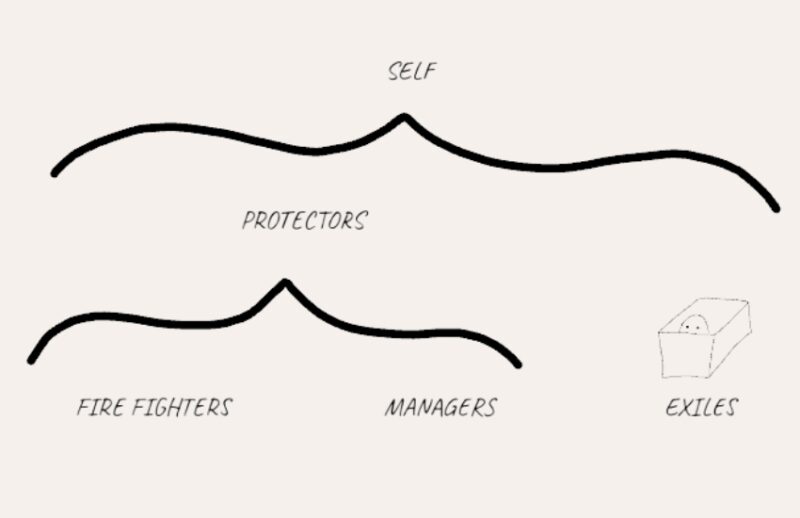
A diagram I like to use when explaining IFS
The Exiles
First, we have the parts of us called the EXILES. The exiles are very often younger parts of ourselves that have experienced trauma. When these parts are triggered by our external environment, they begin to come out of their boxes and show themselves. These exiles bring up intense emotions! That’s where the PROTECTOR parts come in.

The Protector Parts
First, we have the MANAGERS who manage our situation day to day so that we can avoid triggering the exiles, and thereby, not feeling any of the painful emotions that come with them. An example of a manager would be (from the above example) staying busy so you’d always have an excuse to use when asked out by friends. If that doesn’t work and we must go out with friends, the next protector part takes the wheel.

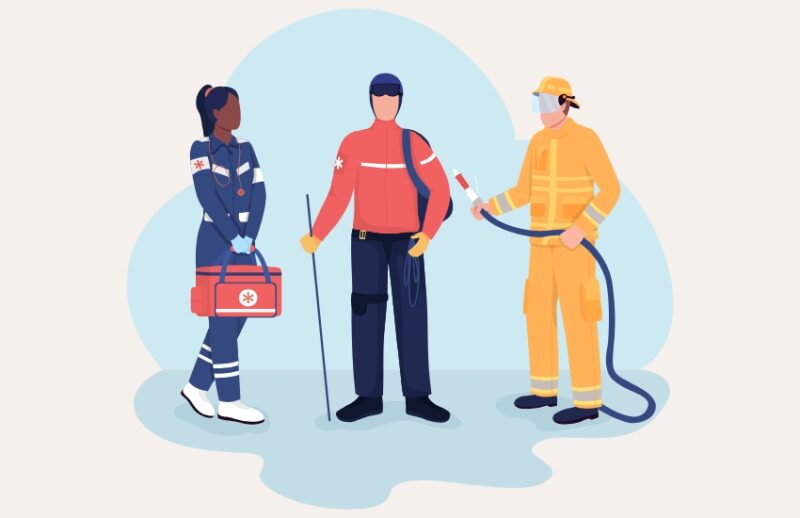
This next PROTECTOR part is known as the FIRE FIGHTER, and it does just that – aims to put the fire out by any means necessary. So, we find ourselves out with friends, our traumatized exile is coming out of the box and we begin to panic with overwhelming feelings of anxiety. Here comes the fire fighter to put that fire out and save the SELF from the trauma that the exile is burdened with (aka the intense, painful emotions). This particular fire fighter may come out as a panic attack, lashing out at others around you, or other very extreme behavior to make sure that exile never comes out of that box. I’ve included a diagram I draw in a session with clients to help visualize this.
No Bad Parts
Oh, and one more thing to remember after all this – There are NO bad parts because they are all trying to serve a purpose! There’s where the judgement, shame, and constant frustration begins to go away, and what we’re left with (the aim of IFS) is appreciation and thankfulness for what those parts are trying to do for us!
In a nutshell (and you can read about this in depth in Richard Schwartz’s book “No Bad Parts”), healing begins when we gain the trust of our protector parts who will then let us communicate with our exile parts, find out what they need to unburden (heal) and begin to RE-PARENT them.
Okay, let’s zoom back in. That’s a lot of information. Read on and this will all make sense. (I encourage you to read this article twice as the second time around, I think it’ll click for you.)
How Anxiety Connects
So, what’s the deal with these parts doing what they do? And what’s the trauma that’s triggered anyways?
Let’s relate all of that to our anxiety! What is anxiety? Really, it’s anticipating future situations that are unknown and dreading the outcome, fearing how those situations may go, and being very uneasy about even approaching those situations.
That anxiety is most likely an emotion coming from one of our exiles because of a past trauma that it’s burdened with (having failed at a very important task in school, never knowing if a parent was going to be mad or happy when they came home, never knowing what the school day would bring because sometimes the kids are nice, and sometimes they’re mean, etc.) For the sake of the example we’re using throughout this writing, let’s go with never knowing if a parent was going to be mad or happy when they came home throughout your entire childhood. Also, let’s say that exile part is 8 years old. For an entire childhood, that uncertainty if we were going to be yelled at or hugged when that parent got home has permeated our adulthood in social interactions of every sort.
In Our Adult Role

Now, we’ve grown up and are a grown adult. Since we’ve not helped that exile heal, and some protector parts have developed ways to protect the SELF, we find that we get incredibly anxious whenever we are invited to go out with friends and family. More often than not, we decline invitations to go out (now, see this: a manager part), and find that we’re also experiencing a slew of other issues because of our isolation. It worked to isolate at age 8 because we’d avoid the parental outbursts, but that manager technique isn’t working so well now.
We also found at age 8 that if we were mean to others before they could be mean to us, we could control the situation and experience less anxiety around wondering if the other was happy or mad – at least we knew they were mad. (That’s the behavior the fire fighter part learned.)
We’ve now got the whole gang operating together with the goal of protecting the SELF, but the way in which these protectors are doing their job is actually hurting more than helping in our adulthood.
Remember, the point of this is how IFS helps reduce anxiety. Well, we have to get to that exile who brings up tremendous anxiety when there’s any threat of a social situation (triggering that 8 year old who’s unsure if the parent will be mad or happy when they come home).
We must first thank the protectors for the work they’ve done, gain their trust, and ask permission to gain access to the exile. Once we’re with the exile, we can ask what they needed back then. Picture that 8 year old self. Maybe they needed a trustworthy adult in their life; maybe a friend to call; or maybe to be able to put into words how they feel. That’s where the SELF comes in (you!) and you work on re-parenting the exile. Let’s say they needed a trustworthy adult. That can be you – now – grown adult you! You can hear what the exile has to say, validate it, develop trust with that part, and ultimately unburden it from that anxiety and uncertainty. In essence, you can let that 8 year old you be 8 years old again while you, the SELF, can regulate the parts instead of them regulating you, and giving your protectors more effective jobs to do (read more about this in the book).
Rewriting Our Story

So, not only can we calm that anxiety by getting to those exiles and helping them get what they need, but we can also learn a lot about ourselves in the process! Maybe we actually are good in social situations, we just didn’t know it because that anxiety around not knowing what a person’s mood will be (fear developed in childhood) was keeping us from diving in!
As I’ve said before, IFS can sound different, and that’s because it is! It’s worked (and is working) in my own life, and I’ve seen it do wonders in my client’s lives over the years as well. Do some research on it, ask your therapist about it, and give it a shot.
www.theholisticcounselingcentergr.com
www.psychologytoday.com/us/therapists/henry-muller-east-grand-rapids-mi/812276