Our Hidden Source of Strength
Our sense of wonder can be a source of strength—perhaps a hidden strength that we might not have recognized. But recent neuroscience research shows us that awe is a healing power for strength and resilience. A moment of sheer amazement can ease our brain and body from the grip of anxiety. Even a few minutes of being wowed by something that takes our breath away can shift our entire outlook for the day.
Perhaps a cardinal alights near our window and time seems to stop, or a forgotten song comes on the radio that gives us chills, or we pause to view the vast, lavender skies of a sunset. These brief experiences of awe allow us to shift out of rumination, worry, and tension by coming into the present moment and opening to a wider and more receptive state of mind.
Neuroscience researchers such as Dacher Keltner (Awe: The New Science of Everyday Wonder and How It Can Transform Your Life) describe awe as “the feeling of being in the presence of something vast that transcends your current understanding of the world.” He adds, “Wonder, the mental state of openness, questioning, curiosity, and embracing mystery, arises out of experiences of awe.”

Researchers have found that a state of awe deactivates the default mode network (DMN) of our brains, freeing us from our nagging, self-referential thoughts, and opens our minds to new experiences. Researchers have also discovered how awe releases us from our “predictive coding” of our expectations and predicted outcomes so that we can be less biased about what we think should happen next.
In short, a moment of awe can shift us out of our thoughts as well as expectations and help us see the world and each other in a whole new light—at least briefly. Yet even a minute of awe makes a significant difference in lowering our level of anxiety, including lowering inflammation. We don’t need an earth-shattering awe experience to gain the benefits; little wondrous moments also ease us into slowing down and grounding.
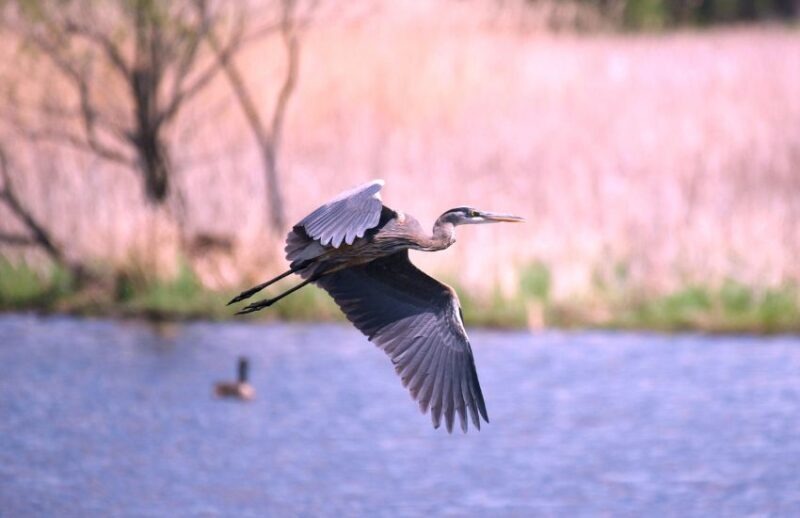
Having lived with anxiety and PTSD for fifty years, I had not realized nor valued my own sense of wonder and wonder-seeking traits that made me resilient and hopeful. In particular, I felt a wondrous sense of connection with blue herons and other water birds, finding solace in their marshy coastal sanctuaries of New England where I opened to healing. I followed the herons to their watery havens and welcomed a wider world of beauty, oneness, and belonging.

Little did I realize over the decades how much my heron encounters in their wetland habitats had helped me recover from acute anxiety, fear, and loneliness. However, no one I knew seemed to value the power of awe and wonder, including the psychotherapists I saw in the 1980s and 1990s. I was told I was “escaping” when I turned to wondrous moments, or that I was “withdrawing” from the world and people around me.
Yet, indeed, I felt more grounded, stronger, and calmer after my awe experiences—and more relaxed in social situations after walking by the river, or after watching chickadees at the bird feeder. And if someone wanted to walk with me or watch birds with me, I was more at ease in their company.
Other awe-inducing activities such as listening to sublime music from Enya or stepping into a glorious cathedral was a way for me to share my awe with others. Quite simply, awe, wonder, and beauty seemed to bring out the best in me—and in others. I only wish I’d claimed my sense of wonder as a strength sooner in my life—and that others had recognized that strength in themselves.
Thankfully, recently, neuroscience researchers have validated the healing benefits of these profound, soulful experiences of awe and wonder, and encourage us to share these vital emotions with others—in spite of a cynical society around us. Our sense of wonder makes us resilient as well as resistant to the callousness and harshness in our uncertain, tech-driven world.
And for living with anxiety, awe and wonder moments give us little pockets of breathing space and peace.
How to Identify Awe and Wonder Experiences
Neuroscience research has created a useful tool to help us identify moments of awe and to locate ways to find more of these experiences.
A group of researchers (Yaden, Kaufman, Keltner, Zhang, Gaggioli, and others) developed the Awe Experience Scale that describes six common factors of an awe experience. These factors can serve as indicators to recognizing moments when we are truly feeling awe.
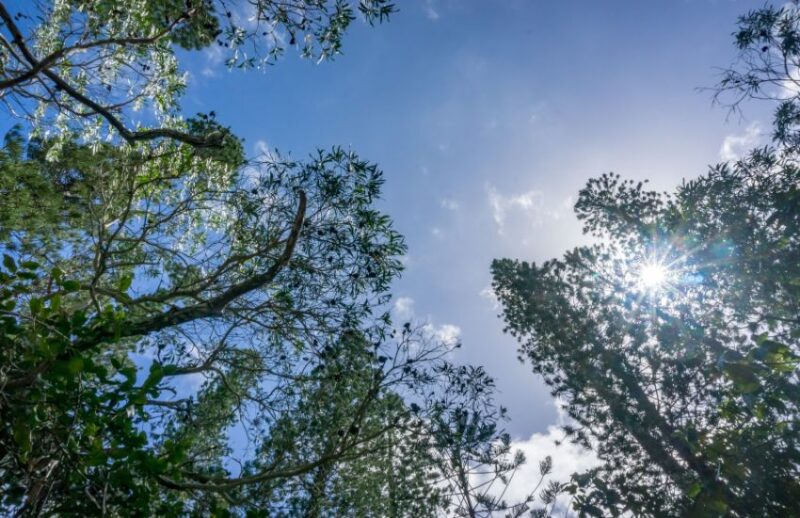
- The Perception of Vastness: We feel a sense of vastness as we look out to spectacular vistas (open skies, constellations, wide oceans, lakes, open landscapes, mountain summit views, open expanses outdoors or indoors. Music, film, or art can also evoke vastness and spaciousness.)
- Alterations in Time: Time seems to stand still or slow down. A pause. You momentarily forget about time and the time-based, rushed thoughts that make you anxious.
- Self-diminishment and the “small self: Your thoughts that were centered on you seem to disappear and your mind shifts to what is outside of you. You feel smaller in the presence of so much greatness around you. (Example: Remember when groups of enthusiasts experienced the solar eclipse “totality” in April 2024 and everyone felt small while marveling at the universe.) Researchers call this small sense of self a “small self” — you feel small in a good way.
- Connectedness: You feel a sense of oneness and connection with everything and everyone around you. (Examples include joining in with a huge singing audience at a concert, or feeling connected to the birds around you in a forest, or feeling a part of something powerful and spiritual at a ceremony.)
- Physical sensations: You feel chills, goosebumps, or a warm glow. (Even when someone tells a story of their awe experience, you feel chills–and those chills can be contagious with others in the audience.)
- Need for Accommodation: You might not be able to absorb the experience all at once. It could be indescribable and you need time to reflect on the experience in order to comprehend it. In short, it is indescribable yet unforgettable.
Any of these factors of an awe experience can help ease anxiety.
Certainly, my awe-filled encounters with blue herons in vast marshy wetlands offered all six of these features of an awe experience. But even one or two of these can make a difference in alleviating nagging thoughts on days burdened with anxiety.
Hopefully, the more we understand the effects that awe and wonder have on our brains and bodies, the more we can bring more wondrous moments into our lives.
And awe is contagious. Shared awe and wonder experiences can especially help alleviate social anxiety. In the following examples of shared moments that take our breath away, we might remember how we shifted out of our worries and fears in the magic of something amazing.

Ways to Share Our Sense of Wonder with Others (And Ease Social Anxiety)
- Gazing out at wide, open vistas, open skies, wide bodies of water, sunsets
- Watching birds, at bird feeders, or while walking in nature
- Sharing our own wondrous stories of moments that took our breath away (reminiscing about those amazing moments with others)
- Sharing wonder while exploring wildlife with children or grandchildren
- Sharing beautiful, wondrous music with others (just listening together without having to talk much)
- Enjoying art exhibits—including immersive exhibits
- Attending IMAX showings of nature and space features
- Enjoying (as a group) watching nature videos and documentaries
- Viewing constellations and night skies (also watching the Webb telescope online)
- Reading wondrous poetry out loud with others who like poetry (Mary Oliver, Wendell Berry, Robert Frost, Maya Angelou, and others)
- Going to concerts, performances, or festivals
- Watching (as a group) concerts on YouTube (or awe-inspiring movies or events)
- Walking together through a garden, park, woods, hiking with someone
- Sharing stories of amazing dreams, synchronicities, signs, and symbols